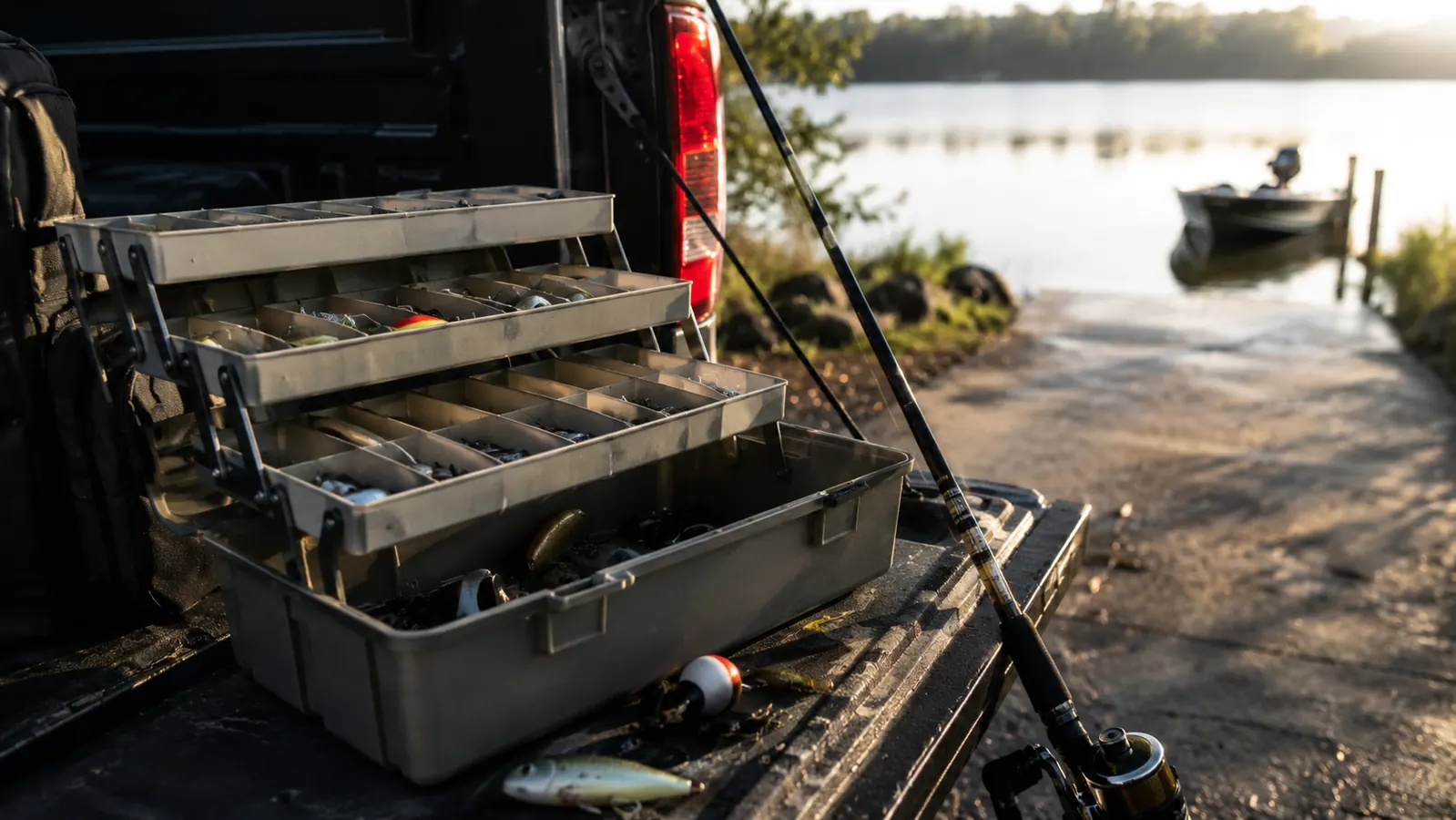
I have used the Plano 3-Tray Tackle Box for two full seasons, and I bought it to replace a soft bag that let hooks and lures tangle into one mess. It lives in the bed cap of my half-ton pickup from May through October, gets thrown around on state park campouts, and still opens like the day I bought it. This comparison is about whether the Plano is still the right buy when the KastKing HyperSeal sits on the same shelf. My answer: for most shore and boat anglers, the Plano wins. For anyone who needs a sealed box that can take a swim, the KastKing is the one.
I am a framing carpenter, not a tackle reviewer. I fish the Finger Lakes and the creeks near home with my wife Terri and sometimes our son Kyle. We fish from shore and from a 12 foot aluminum jon boat. I want a box that sets up fast after a long work week and does not leave me untangling line at first light. The Plano does that. The KastKing HyperSeal does a different job, and it does that job well. Here is how they compare after real use.
| Plano 3-Tray | KastKing HyperSeal | |
|---|---|---|
| Price | Costs less for the same three-tray layout | Costs more, partly for the sealed case |
| Waterproofing | Weather resistant, not sealed | Sealed gasket, made to keep water out |
| Organization | Three trays with divided compartments, dual top access | Trays plus sealed storage, fewer small dividers |
| Latch ease | Simple snap latches, easy one-hand open | Heavier sealed latch, more secure but slower |
| Latch security | Good enough for a truck bed | Sealed latch keeps water and dirt out |
| Durability | Survived two seasons of truck bed abuse | Sealed shell built for rougher conditions |
| Weight | Lighter, easier to carry to shore | Heavier because of the sealed case |
| Best for | Shore, jon boat, and truck bed use | Kayak, canoe, and wet conditions |
Where Plano Wins
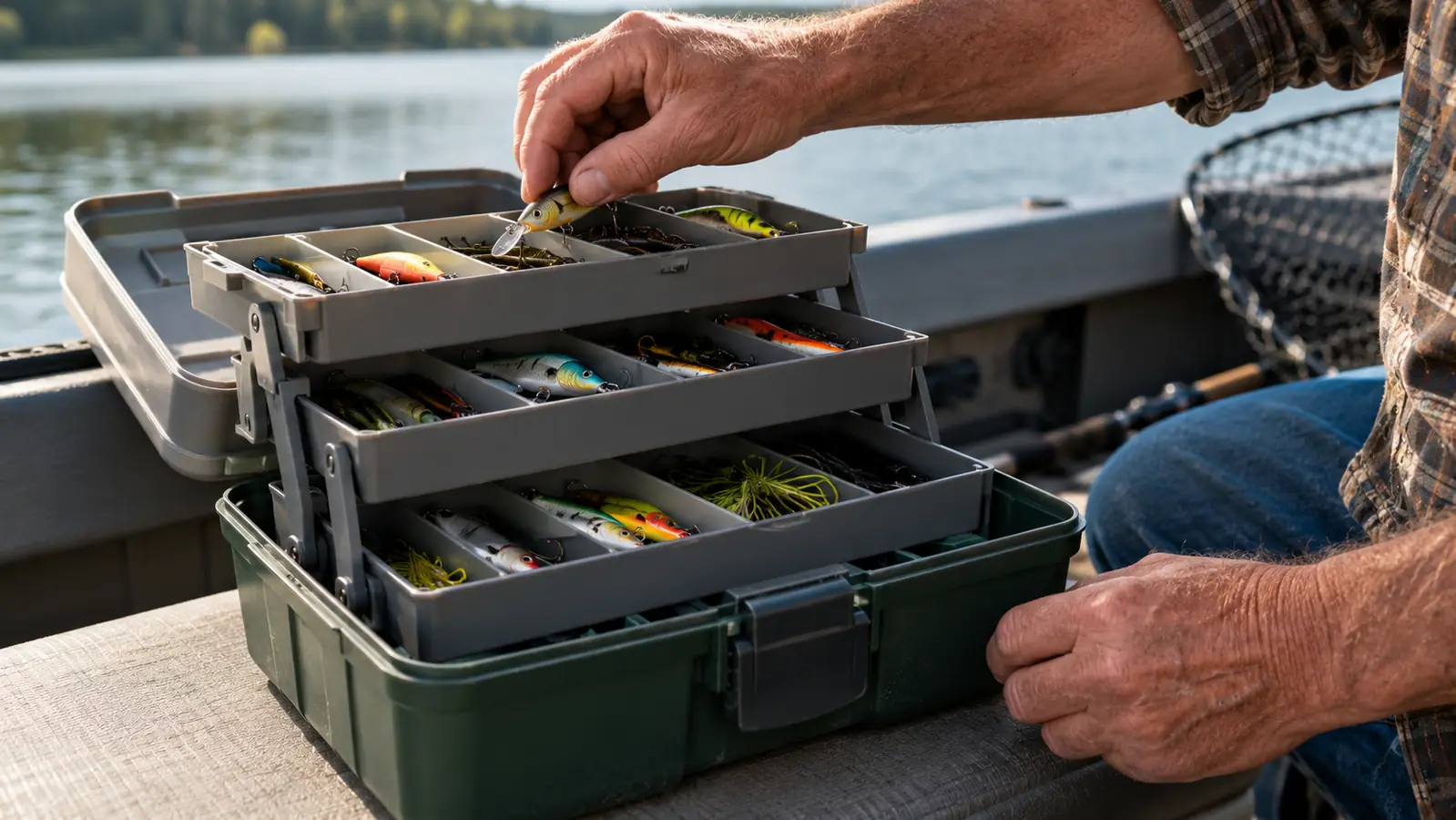
The Plano wins on the things that show up every single trip. It costs less, which matters when you are outfitting a family. It is lighter, so my wife Terri can carry it down to the water without a fight. The three trays flip open from the top, and each tray has divided compartments that keep spinnerbaits, hooks, and weights from tangling. After a week of work, I do not want to wrestle with a latch or a zipper at 6 in the morning. The Plano opens with one hand.
Last June we camped at a state park on the east side of Seneca Lake, and I had the Plano out of the bed cap and a spinnerbait tied on before Terri had the tent poles out of the bag. That is the whole argument for this box in one morning. It does not need a dry bag, a flat surface, or a second person. You set it on the tailgate, flip a tray, and you are fishing. The soft bag I used before this one needed two hands, a flat spot, and a careful zip, and it still let hooks tangle into one mess by the end of the weekend. The Plano does not ask any of that.
The dual top access is the feature I did not know I needed. You can open either side without spilling the whole box. When Kyle is fishing on one side of the jon boat and I am on the other, we can each reach in without trading places. The trays slide out for cleaning, and the plastic has held up to being thrown in the bed cap with tool boxes and tie-downs. Two seasons in, no cracked hinges, no broken latches.
I also like that the Plano does not pretend to be something it is not. It is a utility box. You can hose it off, dry it in the sun, and load it again. There is no gasket to keep clean, no seal to check. For a weekend angler who keeps gear in a pickup, that simplicity is worth more than a waterproof rating.
Where KastKing Wins
The KastKing HyperSeal wins the one argument that matters to a specific group of anglers: water stays out. The sealed gasket and the heavier latch mean you can drop this box in a creek, leave it on a kayak deck in a rainstorm, or get caught in a downpour without opening it to find wet lures. If you fish from a kayak or wade rivers, that is a real advantage. I have seen soft bags and open trays soak through, and rusted hooks are a quick way to ruin a morning.
Last October I took the borrowed KastKing out on a morning when a cold front blew through and the lake was too rough for the jon boat. I set the box on the dock while I rigged up, and a wave came over the planks and soaked it. The Plano would have had water in every tray. The KastKing opened dry. That one moment told me exactly who this box is for. It is not for me on most trips, because my box rides in a truck and only gets wet when I carry it to the bank. But I understood the price tag after that morning, and I would not argue with a kayak angler who says the seal is worth the extra weight.
The KastKing also feels more secure when it is closed. The latch is stiffer, and the seal gives you confidence that small jigs and split shot will not work their way out. The material is thicker in the spots that take impact. If you are the kind of angler who treats gear hard and expects a box to survive being kicked around a boat, the KastKing is built for that abuse in a way the Plano is not.
I will be straight about the tradeoff. The KastKing costs more, weighs more, and the sealed design makes the trays a little slower to open. For me, those tradeoffs are not worth it. For a kayak angler, they are exactly what the money buys. This is not a case of one box being better. It is a case of two boxes built for different trips.
The Plano 3-Tray Is the Right Box for Most Weekend Anglers
If you fish from shore, a jon boat, or the back of a pickup, the Plano gives you organized trays, easy access, and a price that leaves room for bait. See today's price on Amazon and read the full long-term review.
Amazon Check Today's Price on Amazon →Who Should Buy Which
Buy the Plano 3-Tray if you fish from shore, from a small boat, or from a dock, and your gear lives in a truck or a garage. Buy it if you want quick access, light weight, and a box you can replace without guilt when it finally wears out. Buy it if you mostly fish bass, panfish, and walleye in lakes and creeks where the box is not going to spend time underwater.
Buy the KastKing HyperSeal if you fish from a kayak, wade rivers, or leave your tackle box exposed to weather. Buy it if you have lost lures to a flipped boat or a sudden storm and you want that worry gone. Buy it if the extra weight and the higher cost are a fair trade for a sealed case. For everyone else, the Plano is the better buy, and it has been my choice for two seasons.
If you are still on the fence, think about the worst thing that can happen to your tackle. If the worst thing is a spilled cup of coffee in the truck, the Plano is plenty. If the worst thing is a flipped kayak, buy the KastKing. Match the box to your worst day, not your best one.
How I Tested These Boxes
I did not run a lab test. I bought the Plano in the spring two years ago, the week after a trip where the old soft bag dumped a handful of treble hooks into the bottom of the jon boat and I spent twenty minutes untangling line at first light. Since then it has been on every trip I made, which works out to most weekends from May through October plus one week at a state park campground in August. I left it in the truck bed through rainstorms, a stretch of 90 degree days, and one cold snap in late October. The KastKing I borrowed from a friend who kayak fishes, and I used it on a few wet mornings to see what the sealed design really adds.
One thing I did on purpose: I loaded the Plano exactly the way I load it for a real trip, with two trays of bass lures, one tray of walleye rigs, and the bottom holding spare line, hooks, and a small first aid kit. Then I left it in the truck for a week in August and opened it on a hot morning to see if any hooks had worked loose or any trays had shifted. Nothing had moved. I did the same with the borrowed KastKing, and it held the same load without complaint. That told me both boxes do the basic job right, and the real difference is the seal.
That is not a controlled test. It is a working test, the kind that tells you if a box will hold up when it gets thrown in with the tool boxes. I think that is more useful than a spec sheet. A tackle box either works on the water or it does not, and after two seasons I know which one I reach for.
What the Sealed Design Costs You
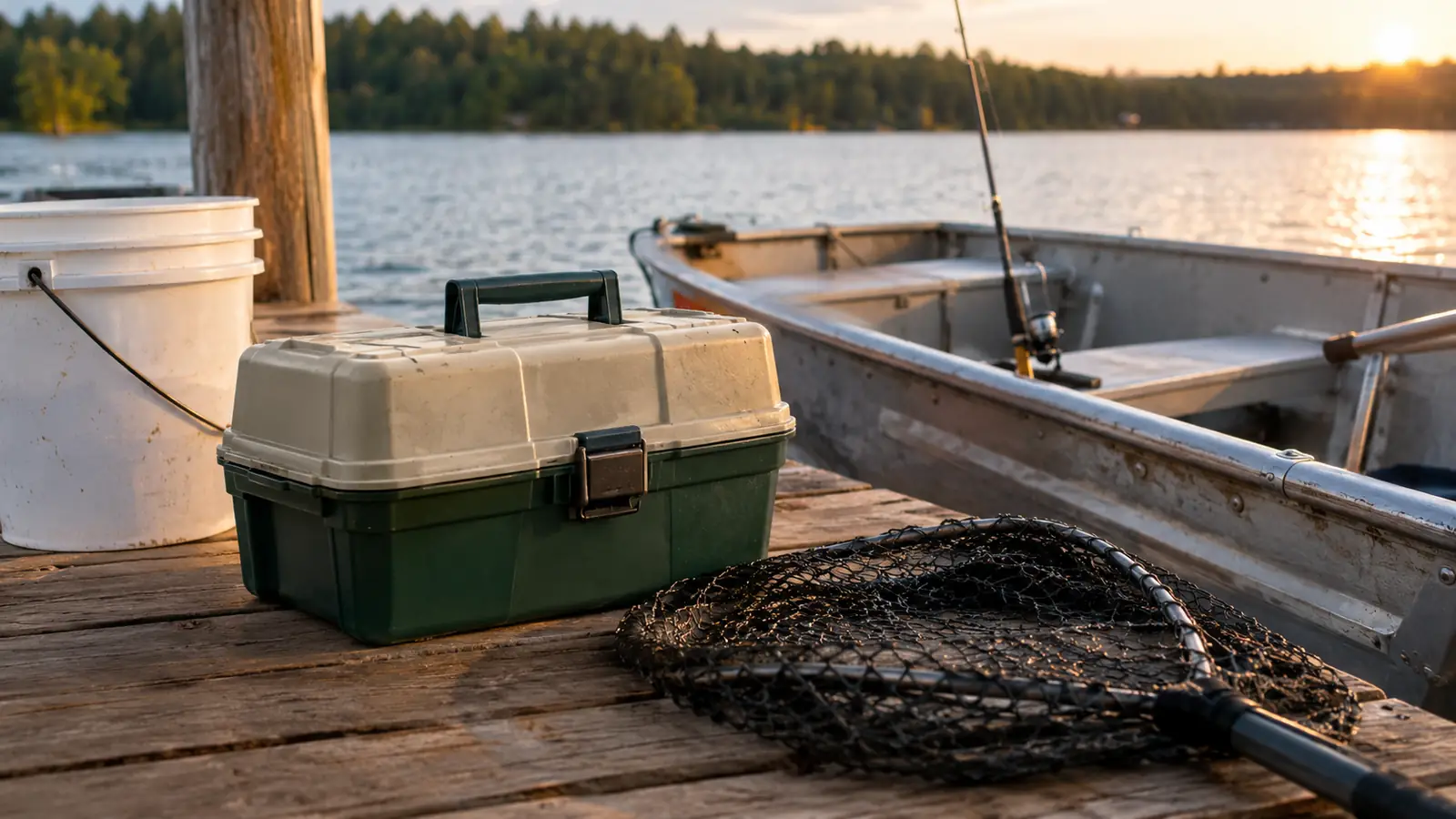
The KastKing's seal is not free. It adds weight, and you feel it on a long walk down to the water. It makes the box harder to open with one hand when you are holding a rod. The latch takes a deliberate push, which is fine with two hands free and annoying when you are juggling a net. The gasket can also trap moisture if you close it on a wet lure. One morning I shut the borrowed KastKing on a wet soft plastic and left it in the truck for a week. When I opened it, the tray had a film of moisture. The Plano never does that, because there is no gasket to hold water in. That is a small job, but it is a job the Plano does not ask you to do.
For a kayak angler, that maintenance is a fair trade. For a weekend shore angler, it is just extra work. I like gear that disappears into the background. The Plano does that. The KastKing asks you to pay attention to it.
I also noticed the KastKing does not sit as flat on a bench. It rocks a little when you set it down on a boat seat. The Plano has a flat bottom and stays where you put it. That matters when you are reaching for a hook while the boat rocks.
A Few Things to Know Before You Buy
Before you decide, think about how your gear actually gets used. If you are like me, the box rides in a pickup and only sees water when you are carrying it to the bank. The Plano handles that without any special care. If you leave your box on a kayak deck or in a canoe, the KastKing is the safer bet.
Also consider how much tackle you carry. The Plano's three trays have fixed dividers, which keeps things sorted but limits how much you can pack. The KastKing's layout is similar, but the sealed case adds bulk. Neither box is the biggest on the market. Both are fine for a weekend angler.
And if you are buying for a kid or a first timer, the Plano is the easier box to learn. The trays come out, the compartments are labeled by size, and there is no seal to mess up. A young angler can keep it organized without being precious about it. The KastKing is a better box for someone who already knows they need it.
The Bottom Line
The Plano 3-Tray Tackle Box is the better buy for most people who fish the way I do. It is lighter, cheaper, easier to open, and it has survived two seasons in the back of my pickup. The KastKing HyperSeal is the better buy for kayak anglers and anyone who needs a sealed box. Pick the one that matches your trips, not the one that looks better on a shelf.
Still Deciding? Start With the Plano
For shore, jon boat, and truck bed fishing, the Plano 3-Tray has been my pick for two seasons. Check today's price on Amazon and see if it fits your setup.
Amazon Check Today's Price on Amazon →