
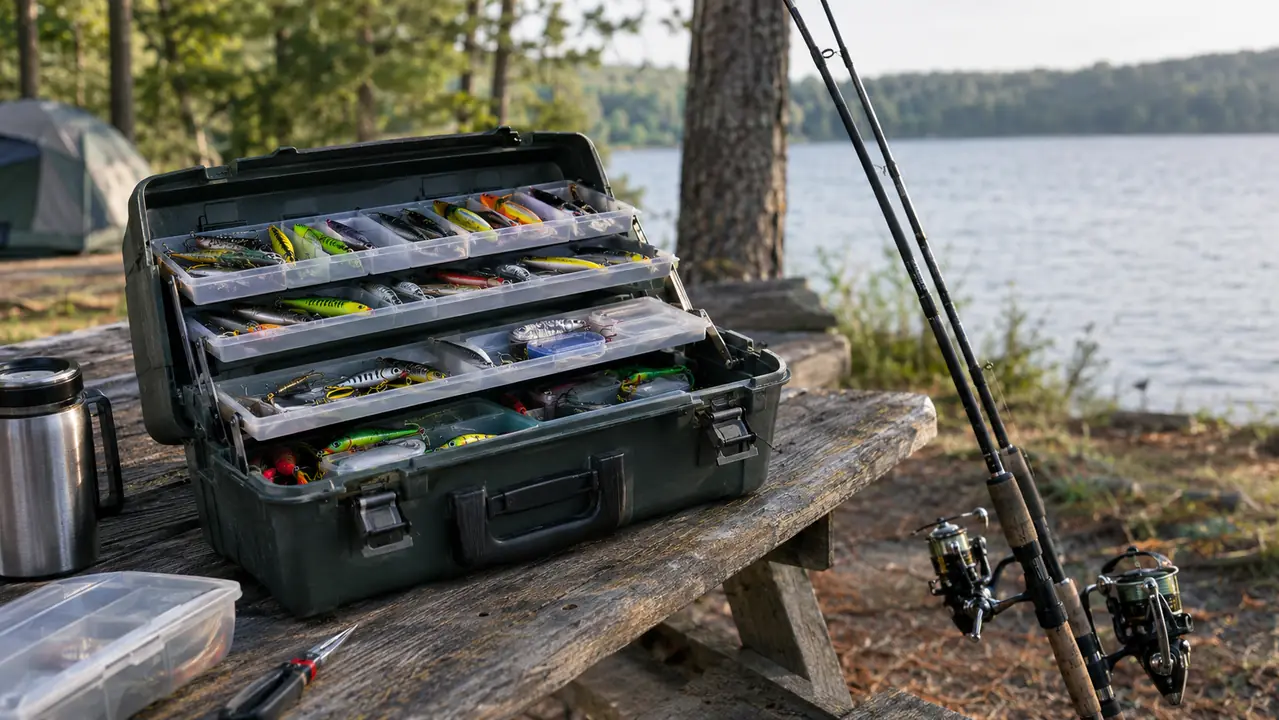
The soft bag was the problem, not the fishing. Every hook, swivel, and spoon sat in one pocket, and by the third trip they had welded themselves into a knot you could spend ten minutes untangling on a dark bank. I bought the Plano 3-tray tackle box two years ago to fix that, and it did. The old bag lives in the basement now, and it will stay there. This is what months of real weekend use actually look like when the gear has to live in a truck bed.
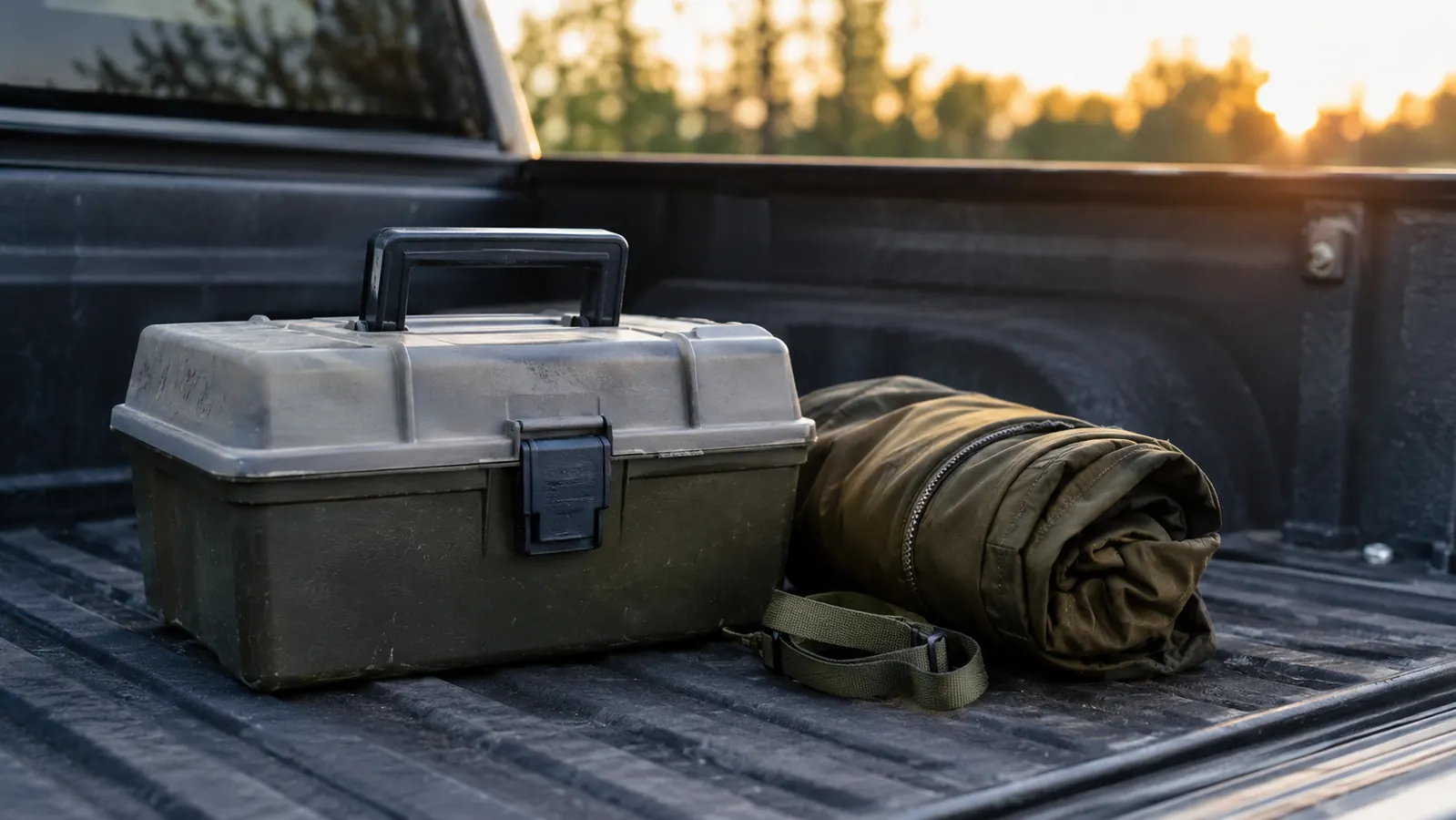
I frame houses for a living, and I fish the Finger Lakes most weekends from May through October. The box lives in the bed cap of my half-ton pickup all season, next to a spare jacket and a roll of straps. It has been rained on, baked in the sun, and bounced down a gravel road more times than I can count. If it survives that, it is good enough for me. That is the test that matters for the kind of gear I buy.
The Quick Verdict
For less than a good spool of line, this box organizes a season of bass and panfish tackle and survives being thrown in a pickup. It is not waterproof and the trays need a level hand, but after two years of weekend use I would buy it again without thinking.
Amazon Check Today's Price →Stop untangling lures on the bank. See today's price on Amazon.
Two years of weekends, one box, and I have not untangled a knot on the bank since. If your soft bag has become a rat's nest, the Plano 3-tray is the cheap fix that actually holds up.
Amazon Check Today's Price on Amazon →How I've Used It
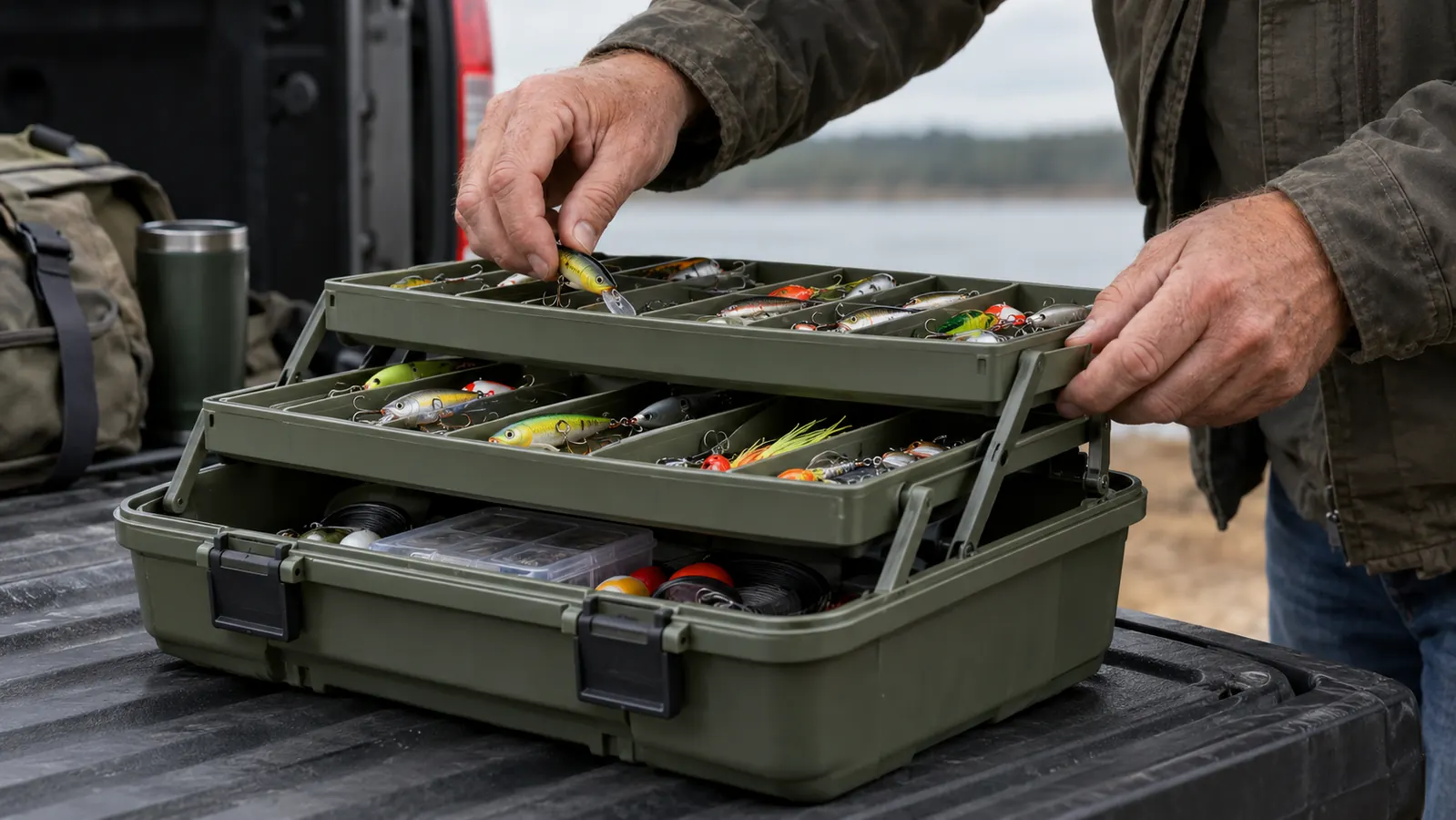
I bought this box to replace a soft tackle bag that let everything tangle together. The bag was fine for carrying gear, but it had one big pocket, and hooks, weights, and lures all fought each other in there. The Plano changed how I pack. Top tray holds the spinnerbaits and jigs I reach for most. Second tray holds spoons and crankbaits. Bottom tray is terminal tackle: hooks, split shot, swivels, and a few bobbers. Everything has a place, and the dividers keep it there. I pack it the same way every time, so I always know where the jigs are.
My son Kyle comes along on a few trips each summer, and he grabs the box without asking. That tells you something: it is easy to use. He opens whichever side faces him, pulls the tray he wants, and closes it. No fumbling, no dumped lures. On my jon boat it sits on the middle bench, and when I fish from shore it rides in a small backpack with a water bottle and a rain shell. That is the highest compliment I can give a piece of gear.
The dual top access is the feature I did not expect to care about. Most boxes I have owned open from one side, and you have to rotate the whole thing to get at the other tray. This one opens from either side, so on a crowded boat bench I can reach in without moving anything. It sounds small. On a windy morning with a rod in one hand, it is not. It is the difference between fishing and fighting with gear.
Packing It for a Weekend Trip
My system is boring on purpose. Top tray: spinnerbaits and jigs, about a dozen total. Second tray: spoons and crankbaits. Bottom tray: hooks, split shot, swivels, bobbers, and a couple of small snap swivels. When Kyle comes along he reorganizes it, and I let him. The dividers make it easy to reset.
On a Friday night after work, I grab the box, check that the latches are clicked, and toss it in the bed cap. Saturday morning I am on the water without thinking about tackle. That is the real benefit of this box: it removes a decision from the morning routine, and it keeps me from buying lures I already own because I cannot find them.
I keep a small zip bag of soft plastics in the bottom tray. It fits. I keep a hook file and a tiny bottle of reel oil in the side pouch I added. Everything I need for a day on the water fits in one hand.
I used to carry everything I owned, and I spent more time digging than fishing. Packing light changed that. The box enforces the habit because it only holds so much, and that turns out to be a feature.
Design and Layout: Three Trays, No More Knots
The layout is simple, and simple is the right call for this kind of gear. Three trays stack in the body, and each tray has adjustable dividers that click into slots. I moved mine around in the first week and have not touched them since. The dividers are stiff enough that a hook point does not push through into the next section. That is the whole point of a tackle box, and most of them miss it.
The plastic is thick, not brittle. I have left it in the sun on a tailgate for a full day and the trays still slide freely. The clear lids mean I can see what is in each tray without opening it, which sounds like a small thing until you are looking for one specific jig head at dusk. The latches are simple tabs. They click shut with a positive feel, and they have never opened on their own. I have had cheaper boxes where the latches wore out in a season.
Size is part of the design. The box is big enough for a weekend of freshwater fishing and small enough to fit under a truck seat or on a boat bench. It is not a tackle station. It is a box you grab on the way out the door, and that is exactly what I wanted. If you need to haul a hundred lures for a tournament, this is not that box. It is sized for the way most people actually fish, not the way catalogs imagine it.
The handle is molded into the body, so there are no screws to strip and no rivets to pop. I carry it two-fingered most of the time, and it balances fine even loaded. The box weighs almost nothing empty, which matters when you are walking a half mile to a fishing spot.
How It's Held Up Over Two Seasons
Two years is not a lifetime, but it is a fair test for gear that lives in a truck bed. The bed cap keeps the worst of the weather off, but the box still sees heat, cold, rain, and a lot of vibration. The latches still click. The hinges have not cracked. The trays slide in and out the same as the day I bought it. I checked it again before writing this, and I could not find a crack anywhere.
I have knocked it off a tailgate onto gravel, and once it landed on a corner and both top trays popped open. That was my fault for not latching it fully, not a flaw in the box. Nothing broke. I picked the lures out of the dirt, latched it, and went fishing. A cheaper box would have cracked a hinge or split a corner on that drop. The latch tabs are still stiff, which is what I want.
The honest limit is water. This box is not waterproof. Rain gets in around the lid, and if you leave it out in a downpour you will find damp lures and rusty hooks. I keep soft plastics in a small zip bag and hooks in their original packs, so a little moisture is not a disaster. But if you need a sealed box, this is not the one. A little care with where you store it goes a long way.
It has sat in the bed cap through a 90-degree July stretch and a frosty October morning. The plastic does not get soft in heat or brittle in cold. I have owned boxes that warped after a summer in the sun. This one has not.
What I'd Change
The trays slide all the way out, which makes cleaning easy, but it also means an upside-down box empties fast. I did that once in the jon boat, reaching for something under the seat. Now I open it level and I latch it before I move it. That is a habit, not a repair. It is the one habit I would pass along to anyone who buys this box.
There is no built-in spot for pliers, a stringer, or a hook remover. I added a small side pouch that hangs off the handle, and that solved it. I also would not stand on this box. It is not a seat, and I have seen people try. The plastic is tough, but it is not built for 200 pounds. A small pouch fixes the complaint, and that is a cheap fix.
One more thing: the box has no shoulder strap and no belt loop. If you are hiking far from the truck, you carry it. For me that is fine, because most of my fishing is within a short walk of a parking lot. For a long hike to a remote stream, a soft pack is better.
Alternatives I Considered
The soft bag this replaced was easier to carry over a shoulder, and I will say that much for it. But one big pocket means everything tangles, and I got tired of picking knots apart on the bank. The Plano fixes that with dividers. For my fishing, which is mostly bass, panfish, trout, and walleye from shore and a small jon boat, three trays is the right amount of organization. I would not go back to the bag.
I have handled the KastKing Hyperseal, which is the box people bring up when you talk about waterproof storage. It is sealed, it floats, and it costs more. If you wade rivers or fish from a kayak, that extra money buys real protection. For bank fishing and a jon boat, I would rather have the Plano's simpler layout and lower price. Different jobs, different tools. I respect the Hyperseal for what it is, but it solves a problem I do not have.
I also looked at the bigger Plano models with more trays. More trays sound better until you realize you are hauling tackle you do not use. Three trays forces me to pack light, and packing light is a good habit on a small boat. I have not missed the extra space.
I get asked whether the box is worth it compared to just using a plastic bag with a few pouches. For me the answer is yes, because the box keeps order without any effort. A bag only stores. This box organizes, and that is the difference.
What I Liked
- Three trays with adjustable dividers keep hooks and lures from tangling
- Dual top access: open either side without spilling the other tray
- Thick molded plastic survived two seasons in a truck bed cap
- Latches and hinges still work after drops, heat, and rain
- Clear trays show what is inside without opening the box
Where It Falls Short
- Not waterproof; rain gets in around the lid
- Open it upside down and the trays dump everything
- No built-in storage for pliers, stringers, or small tools
- Too small for serious saltwater or tournament tackle
Two seasons in the bed cap of a pickup, and every latch still clicks shut. That is the whole review in one sentence.
Who This Is For
This box is for the weekend angler who throws gear in a truck and wants it to work on Saturday morning. It is for the family that fishes a state park lake for an afternoon, the guy who keeps a rod behind the seat, the woman who is tired of digging hooks out of a tote bag. If you fish bass, panfish, trout, or walleye with a medium rod, three trays is plenty. It is also for anyone who has ever stood in a parking lot at dawn trying to find a hook.
It also fits a certain kind of person: someone who would rather spend Saturday morning fishing than organizing gear. I am that person. This box keeps order without demanding upkeep. I set it up once, and it stays set up.
Who Should Skip It
Skip it if you need a waterproof box. Kayak anglers, wade fishermen, and anyone who leaves gear out in the weather should spend the extra money on a sealed box. Skip it if you carry more tackle than three trays will hold, or if you want a backpack style that leaves both hands free on a long walk in. And if you fish saltwater or musky with big lures, you will outgrow this box in a season. Know what you need before you buy, and you will not be disappointed.
One more group: people who like a box they can hose out. The Plano cleans up fine with a damp rag, but it is not a sealed unit, so water and dirt can work their way into the corners. If you want something you can dunk in the lake and shake dry, look at a sealed box.
Bottom line: the Plano 3-tray is not fancy, and it does not try to be. It organizes a weekend of fishing and survives a truck bed. For my money, that is the right trade.
Two years in, I would buy it again. Check today's price.
If your tackle is a knot in a soft bag, the Plano 3-tray is the cheap fix that actually holds up. Two years of weekends says it will do the same for you. See what it costs today on Amazon.
Amazon Check Today's Price on Amazon →