
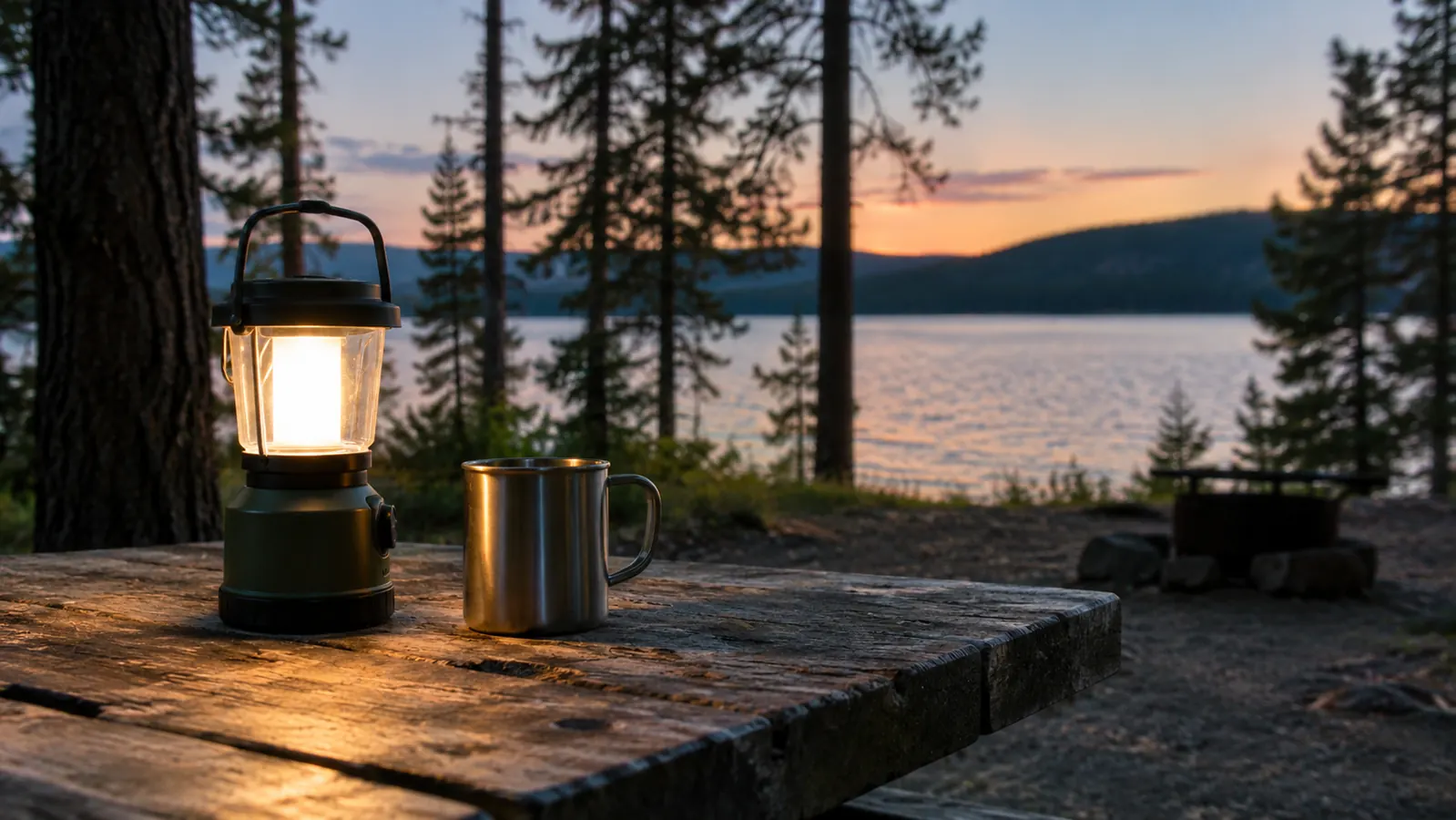
I bought the Lepro rechargeable lantern this spring for one reason: I was tired of feeding D cells to my old lantern. That thing went through a set every two or three trips, and it seemed like the batteries always died on the second night, right when I needed light to find the coffee. So I ordered the Lepro 1000-lumen rechargeable LED lantern, 4400mAh battery, four light modes, and ran it through a full season of weekend trips in the Finger Lakes. I want to tell you what held up, what annoyed me, and which campers should skip it entirely.
The short version is that this lantern is genuinely good, and also genuinely not for everyone. It is bright, it is cheap to run, and it has survived a summer of being thrown into the bed of my pickup. But there are three things nobody mentions in the reviews, and two of them matter a lot depending on how you camp. I will get to all of them.
The Quick Verdict
The best rechargeable lantern I have used for the money, with two real catches: the battery drains fast on high, and the lowest mode is still brighter than some people want for a tent at night.
Amazon Check Today's Price →The lantern that replaced my battery habit
After a season of weekends, the Lepro is the first thing I grab out of the truck. See today's price on Amazon and read what real owners say.
Amazon Check Today's Price on Amazon →How I've Used It
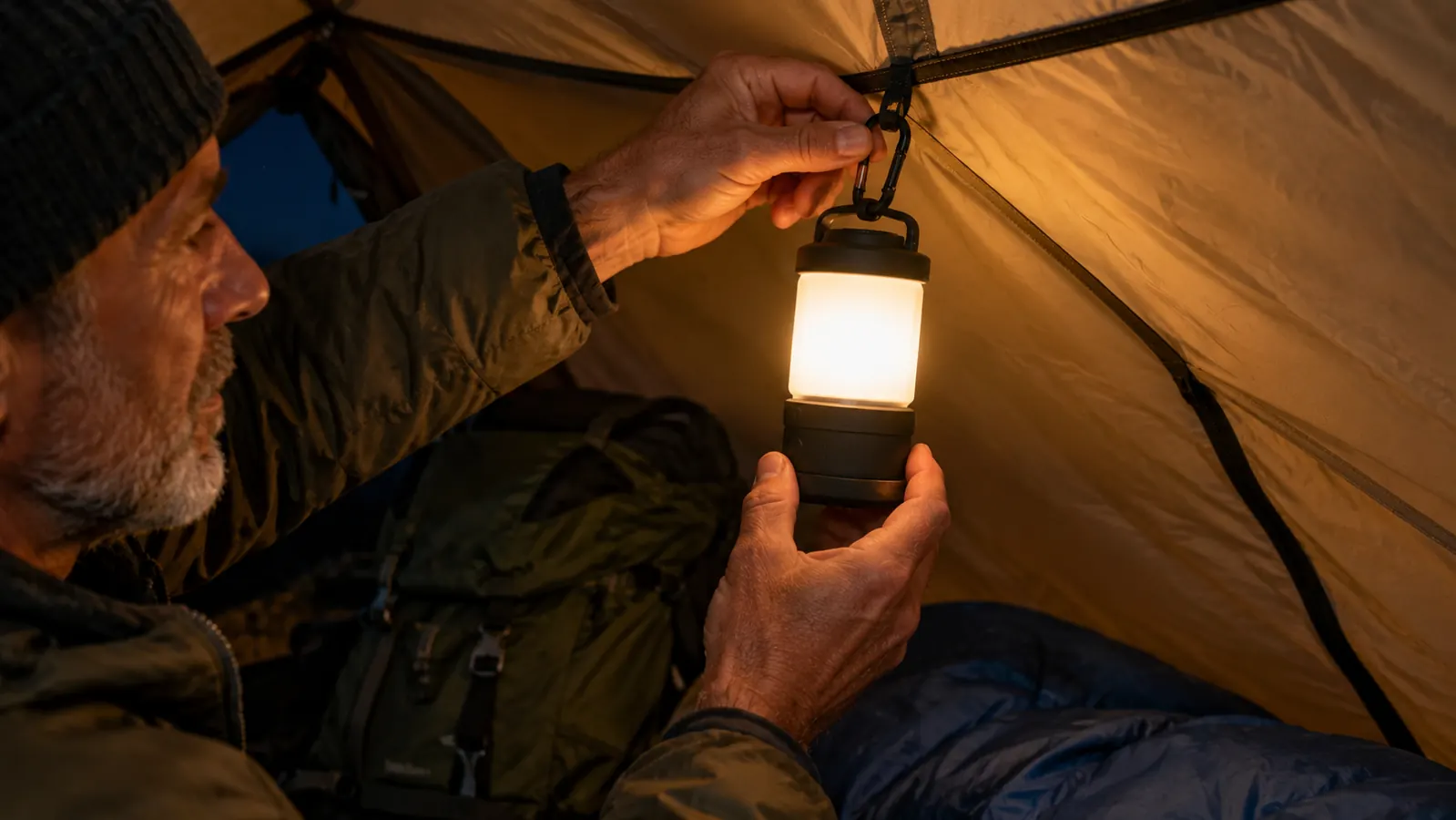
I am a framing carpenter, so my camping is mostly Friday night to Sunday afternoon, plus one week-long trip in August. This lantern came along on every trip: state park campgrounds around the Finger Lakes, a week on a lake shore, and a handful of evenings fishing from my 12-foot jon boat. It rode in the bed cap of my pickup, got rained on twice, got knocked off a picnic table once, and spent a lot of hours hanging from the ridge loop inside the tent. The first real test was the second weekend in June. We set up at a state park near Cayuga Lake in a steady drizzle, and the lantern hung from the tent ridge loop for about six hours that first night while the rain came down. It never flickered, and the rubber flap over the charging port stayed dry. That was the moment I stopped treating it like a gadget and started treating it like gear.
I used it three ways. Hanging from the tent ceiling on the lowest mode while we read. Sitting on the picnic table on medium while we cooked and ate. And on high, aimed at the table or hung from a branch, whenever we needed real light to work by, like filleting a mess of panfish after dark. That is the honest use pattern of a working guy, not a lab test. The fillet job happened on a Saturday night in July after a good evening bite. My son Kyle and I cleaned maybe thirty bluegills and a few small bass on the picnic table, and the lantern sat on high for a solid two and a half hours. It threw enough light to see the ribs clearly, which is the test I care about. A lantern that cannot light a fillet table is not a camp lantern, it is a nightlight.
One thing to know up front: this lantern does not have a built-in handle you can hang from a nail. There is a fold-out hook on top, and it works, but the lantern hangs crooked because the battery sits at the bottom. It annoyed me for about one trip, and then I stopped noticing. If you plan to hang it, just hook it and let it tilt. The light comes out the sides anyway, so the tilt does not matter much. The hook is also stiff when it is new. The first couple of weekends I had to work it back and forth before it would fold out, and I worried I would snap it off. It loosened up by the third trip, and now it flips out with one thumb. That is the kind of detail that only shows up after you have lived with a thing for a while.
The knock off the table happened on the first Friday of August, the start of our week-long trip. I set the lantern on the picnic table while I unhooked the truck, and a gust of wind took a paper plate, and the lantern went with it, landing on packed dirt. It bounced, the battery cover stayed shut, and it lit right back up. I have had cheaper lanterns die from less. Since then it has lived in the bed cap with the tackle box and the stove, and it comes out looking the same as the day I bought it, scuffs and all.
What Nobody Tells You About the Battery
Here is the honest part. The product page says 4400mAh and a long runtime, and that is true on the lower modes. On low, I got multiple nights out of a charge, no problem. On medium, I got a full evening and then some. But on high, this thing drinks power. I ran it on high for about three hours one night while we cleaned fish, and the next night it was noticeably dimmer. It still worked, but the difference was obvious. That second night I had to drop it to medium to get the same light I had gotten on high the night before. Nobody mentions that the high mode is really a two-hour mode if you want consistent brightness.
The other thing nobody tells you: the battery meter is not what I would call precise. There is a small indicator that shows green, then orange, then red. It spends a lot of time on orange, and then it drops to red faster than you expect. I learned to charge it before every trip, no exceptions, the same way I check the propane in the Coleman stove. If you treat it like a battery lantern and expect to grab it whenever, you will eventually grab a dead one. That happened to me exactly once, on a Friday night in September. I grabbed it out of the bed cap, hit the button, and got a weak orange blink. I had forgotten to charge it after the previous trip. Terri found that hilarious, and she was right to.
Charging is easy, at least. It takes a USB cable, and the port is hidden under a little rubber flap on the side. I charge it in the truck on the way to the campground with a 12-volt adapter, which means I never arrive with a dead lantern. That one habit fixed the whole battery anxiety. A full charge from empty takes a few hours, so I plug it in when I leave the job site on Friday, and it is ready by the time we pull into the campsite. I also keep a small power bank in the bed cap, and I have topped the lantern off from that on a Sunday morning before a long hike.
One more battery note: the lantern does not like being left in a cold truck overnight. On a late October trip the temperature dropped to near freezing, and the lantern was sluggish to turn on the first morning, dimmer than usual for the first minute or two until it warmed up. It recovered fully, but if you camp in cold weather, keep it in the cab or in a bag with you. That is the kind of thing the spec sheet will never tell you.
The Light Quality Question
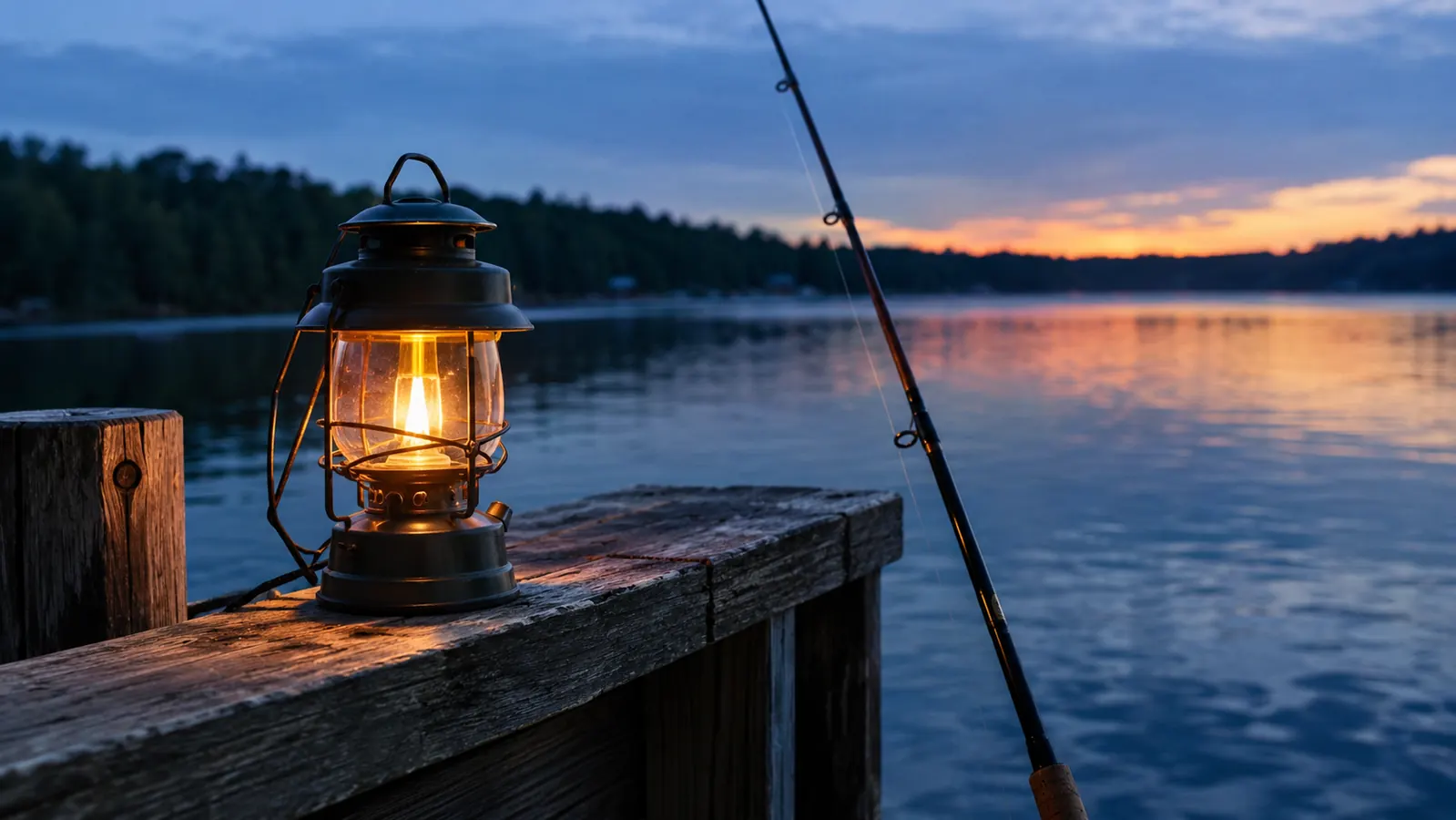
The Lepro puts out a clean white light, and the four modes are genuinely useful: high, medium, low, and a red mode that I thought I would never touch. The red mode turned out to be the thing I used most when night fishing. It does not draw bugs the way the white light does, and it does not wreck your night vision when you are tying on a new hook. I did not buy this lantern for the red mode, but it is the reason I reach for it instead of a headlamp on the boat. On the jon boat I set it on the bench seat behind me, red side facing the water, and I can retie a spinnerbait without blinding myself or spooking the fish.
The downside is that even the low mode is bright. This is a 1000-lumen lantern, and the low setting is still a lot of light for a small tent. If you are the kind of camper who likes a soft warm glow to read by, this lantern may be too much, even on low. I solved it by hanging it inside my sleeping bag vestibule or pointing it at the wall, which bounces a softer light around. It works, but it is a workaround, and I would rather tell you that now than have you discover it on night one. Terri reads before she falls asleep, and the first night she tried the low mode she said it felt like a work light. We ended up hanging it behind the tent pole so the light bounced off the fly, and that gave us a glow we could both live with.
The light is also a bit cool for my taste. It is white, not warm. It makes the inside of a tent look like a workshop, which is fine for finding a sock and less fine for winding down at midnight. Again, not a dealbreaker, but it is the kind of thing the reviews do not mention. Compared to the old battery lantern it replaced, which threw a yellowish glow, the Lepro is crisper and easier to see by, but it has none of that campfire warmth. If light color matters to you, that is worth knowing before you buy.
The mode button deserves a mention here too. One button on top cycles high, medium, low, red, and then off. That sounds simple, but if you are on medium and want low, you have to cycle through high to get there, which means a blast of full brightness in your face at midnight. I learned to turn it off by pressing through the red mode, and I still occasionally hit the button three times when I meant to hit it once. A separate red mode button would be my one design request.
Build Quality and the Truck Bed Test
I will be plain about this: I throw gear in the back of my pickup. The Lepro has survived a full season of that. It has been rained on, bounced around, knocked off a table, and it still works. The body is a matte plastic that does not feel flimsy, and the top hook folds flat so it does not snag on things. There is a rubber ring around the bottom that keeps it from sliding around on a wet table, which is a small detail I did not expect for the money. That ring has saved it from sliding off the tailgate at least twice, and I will take a cheap detail that works over a fancy one that does not.
The one weak point I found is the rubber flap over the charging port. It seals fine when you remember to close it, but it is easy to leave it half open, and then dust and water can get in. I got a little bit of grit in mine this summer and had to clean the port with a toothpick. Not a big deal, but check that flap when you pack up. I made it a habit after the June trip: when the lantern goes back in the bed cap, the flap gets a thumb press. It takes two seconds, and it has kept the port clean ever since.
The other thing I would change is the button. It is a single button on top that cycles through the modes, and you have to press it four or five times to get from high back down to low. In the dark, with cold fingers, that is more fiddly than it should be. I learned to count presses, but my wife Terri still just cycles it until she lands somewhere she likes. The button itself has a solid click to it, and after a full season of use it has not gotten mushy, which is more than I can say for some of the cheap headlamps I have owned.
The battery compartment is another spot I checked. The base twists off to reveal the 4400mAh cell, and it is a standard size, which means when the battery eventually wears out, I can replace it instead of throwing the whole lantern away. That is a bigger deal to me than it sounds. Most cheap rechargeable gear is sealed shut and becomes e-waste the day the battery dies. This one is built to be opened, and the twist ring has a rubber gasket that has stayed seated through a season of use. A few years from now I will know if it was worth it, but the design at least gives me the option.
What I Liked
- Bright enough on high to light a fillet table, and the red mode is genuinely useful for night fishing without drawing bugs
- USB charging means I top it off in the truck on the way to camp, and I stopped buying D cells entirely
- Survived a full season in the bed of my pickup, including rain and a knock off the picnic table
- The battery is a standard size and the base twists off, so it does not have to become e-waste when the cell finally wears out
Where It Falls Short
- High mode drains fast; after three hours of use it was noticeably dimmer the next night
- Even the low mode is bright for a small tent, and the light is cool white instead of warm
- One button cycles through all four modes, so you blast yourself with full brightness just to get to low
- The fold-out hook hangs the lantern crooked, and the charging port flap is easy to leave half open
On high, the Lepro ran noticeably dimmer on the second night after three hours of use. On low, it went multiple nights without a charge. How you use it decides everything.
Who This Is For
Buy this lantern if you camp the way I do: weekends, a week in the summer, and you want one light that does everything from cooking to cleaning fish. It is also a great choice for anyone who is tired of buying batteries. I do not miss D cells at all, and the USB charging means I can top it off from a power bank, the truck, or a wall outlet at home. For a working person who wants gear that just works, the Lepro is hard to beat.
Who Should Skip It
Skip it if you want a warm, dim glow for a tent at night, because even the low mode is bright. Skip it if you cannot charge it between trips, because the high mode will let you down on night two. And skip it if you want a lantern that hangs perfectly straight, because the fold-out hook lets it tilt. None of those are dealbreakers for me, but they are real, and the product page will not tell you about them.
Alternatives I Considered
I looked at the Coleman classic propane lantern before I bought the Lepro. That lantern is bright and reliable, but it runs on fuel you have to carry, and I already carry enough propane for the stove. I also looked at cheaper no-name rechargeable lanterns, and the reason I did not buy one is that the reviews were full of people complaining about dead batteries after a year. The Lepro has been around long enough that the battery reputation is known, and that mattered to me.
The Lepro is not a premium lantern, and it does not pretend to be. It is a practical, affordable rechargeable lantern that does its job well. If you want the absolute best light quality and you are willing to pay for it, there are fancier options. But for the money, and for the way I actually camp, the Lepro is the right call.
Still deciding? This is what I would do
If you camp weekends and want to stop buying batteries, the Lepro is the one I grab out of the truck every single trip. Check today's price on Amazon.
Amazon Check Today's Price on Amazon →