
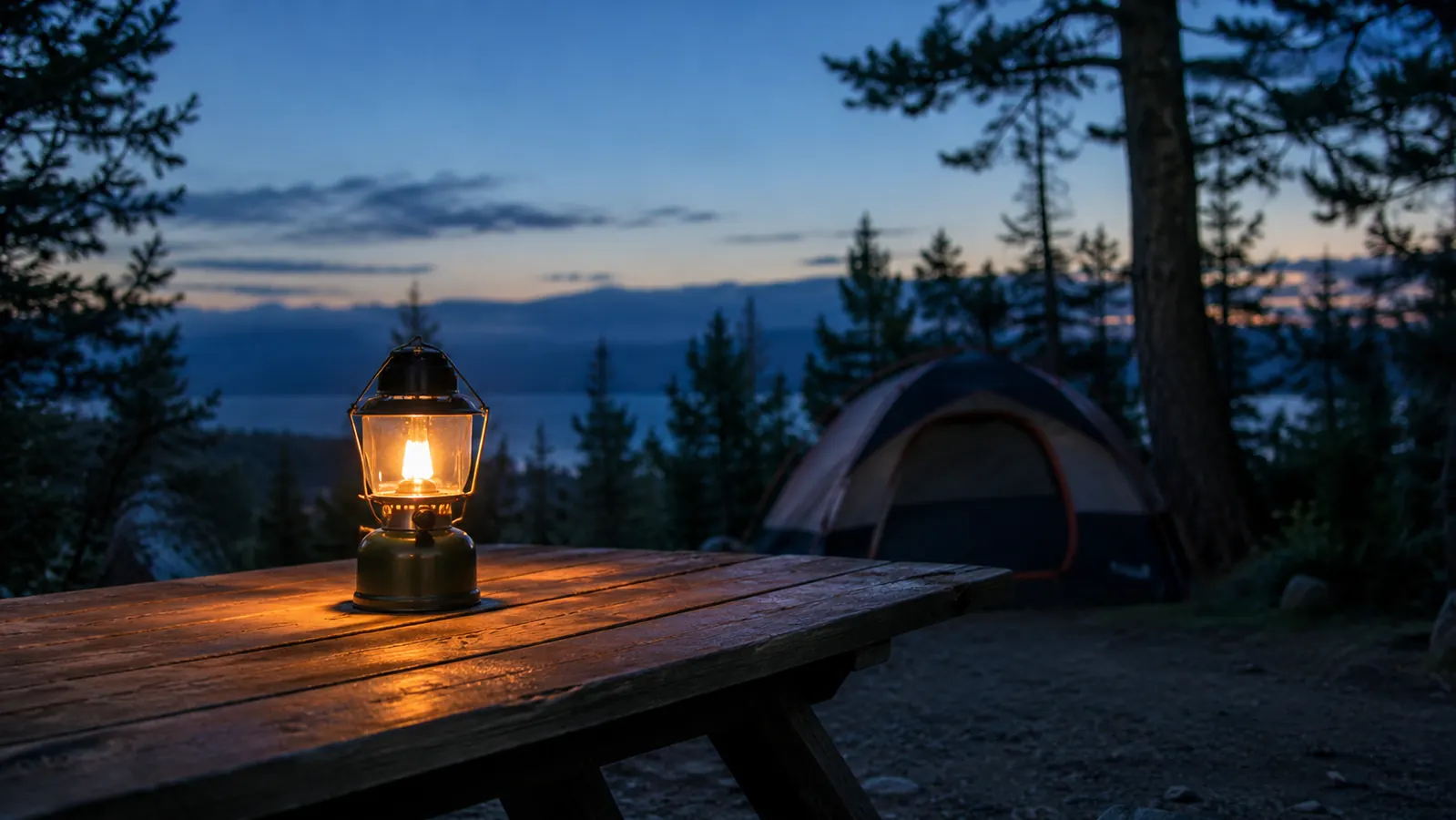
The first time I set up a campsite after dark with a real LED lantern, I was standing at a picnic table in a state-park campground in the Finger Lakes, trying to remember which end of a D cell goes in first. That was the old routine. My old lantern ate batteries like a thirsty dog at a water bowl, and by the second night of a trip it was throwing a weak orange glow that made the whole site feel like a cave. You could see the food on your plate, barely, and nothing else. I bought the Lepro 1000-lumen rechargeable LED lantern this spring to end that routine. After a season of weekend trips and one long week in July, I can tell you exactly how I light a campsite now.
This is not a review of the lantern, though I will get into how it has held up. It is more of a system. Where to hang it, how high, which mode to use for which job, and the small things I learned the hard way so you do not have to. If you camp the way I do, which is to say you work all week and you want Friday night to go smooth, this is the part that matters. None of it is complicated. It just takes a little thinking before the sun goes down, and most of it happens at home before you ever leave the driveway. The whole setup takes about ten minutes once you have done it a couple of times. The first trip it took me longer. Now it is routine.
The Lantern That Ended My Battery Routine
The Lepro 1000LM rechargeable lantern has gotten me through every trip this season on a single charge. Check today's price on Amazon.
Amazon Check Today's Price on Amazon →Step 1: Charge It the Night Before You Leave
The single biggest mistake people make with a rechargeable lantern is showing up with a dead one. I did it once this spring. I grabbed the lantern off the shelf, threw it in the bed cap, and did not think about it again until I needed light and got a dim blink instead. That was the night I learned the rule. The lantern goes on the charger the night before a trip, before I pack anything else. By morning it is full, and I do not think about power again all weekend.
The Lepro charges by USB, so it is easy to top off at home, at a truck stop, or off a small power bank in the truck. I keep the cable in the same drawer as the lantern so I never have to hunt for it. A full charge on the 4400mAh battery has covered every trip I have taken this season, including the week-long one in July. That is the whole point of switching away from D cells. You stop carrying a bag of batteries, and you stop wondering whether the ones in the drawer are any good.
One more thing about charging. Put the lantern somewhere you will see it. If it goes in a drawer, it will live there until next Friday. I charge mine on the kitchen counter, right next to my keys and my wallet. That way it is part of the leaving routine, not an extra step I have to remember. Terri makes fun of me for it, but she has never once stood in a dark campsite waiting for me to find a flashlight.
Step 2: Place Your Lights Before the Sun Goes Down
Walk the site in daylight and decide where the light needs to be. I look for three spots. The table where I cook, the table where we eat, and the path from the fire ring to the tent. Most campsites have one good tree or one awning pole that can cover two of those jobs at once. Find that spot early, and you save yourself a lot of fumbling at nine o'clock. It takes five minutes in the afternoon and it saves twenty minutes at night. I have stayed at the state-park campgrounds in the Finger Lakes enough times that I know which sites have a good branch and which ones do not.
The mistake I made for years was putting the lantern on the table where I was working. That lights the table fine, but it also means your own body blocks the light every time you reach across. You end up working in your own shadow, and the person sitting across from you ends up staring into the bulb. Move the lantern across from you, not next to you, and the whole work area lights up instead of just the six inches in front of your hands.
For the path to the tent, I hang a lantern at the corner of the site nearest the tent door. One lantern on low mode is enough to mark the way and to keep someone from tripping over a tent stake or a guy line. If you are camping with a group, a second lantern at the far end of the site does the same job for the other direction. You do not need a floodlight. You need a marker, and a marker is what a low lantern is.
Step 3: Hang It at Head Height, Not on the Table
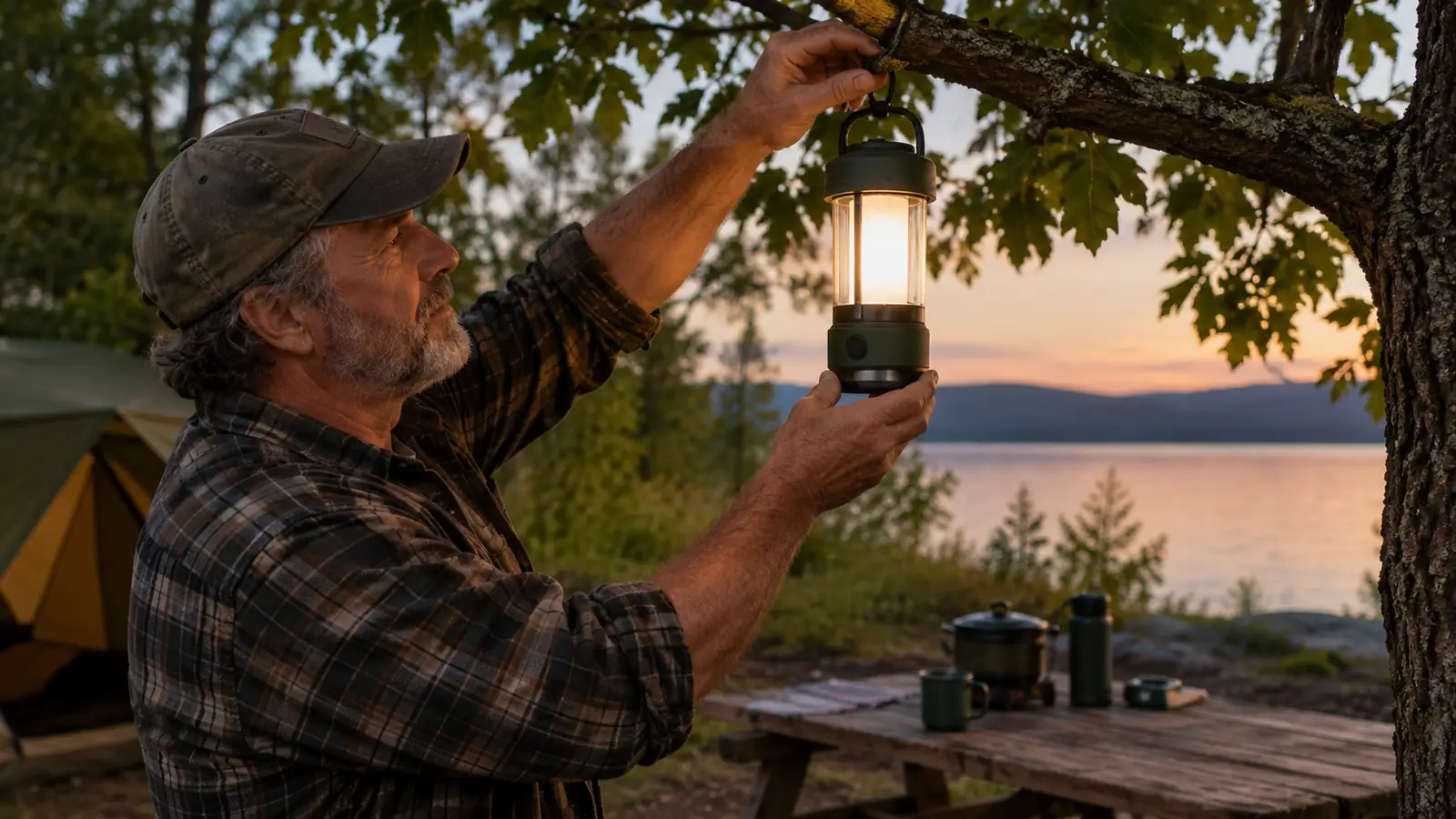
The best light in a campsite comes from above. I hang the Lepro from a tree branch, the ridge of the tent, or the frame of the picnic table awning, with the bottom of the lantern right around eye level when I am standing. From that height it lights the whole table and the ground around it. On the table, it lights the table and blinds everyone sitting across from it. The same lantern does twice the work just by being three feet higher.
I keep a short piece of paracord and one carabiner in the same bag as the lantern. Two minutes with those and I can hang it anywhere. If there is no branch and no awning, I tie the cord to the tent's ridge line and let the lantern hang inside the vestibule. That gives me a lit tent and a lit entryway from one light. If the weather turns, I can pull the lantern inside and still have light without leaving the tent.
Head height also keeps the lantern out of the way of food, water, and elbows. A lantern on the table gets knocked over, dripped on, and covered in bug spray. A lantern hanging from a branch stays clean and stays put. It also throws light over a wider area, which means one lantern can do the job of two. On nights when the bugs are bad, I hang the lantern a little farther from the table and let the light work from a distance.
Step 4: Match the Mode to the Job
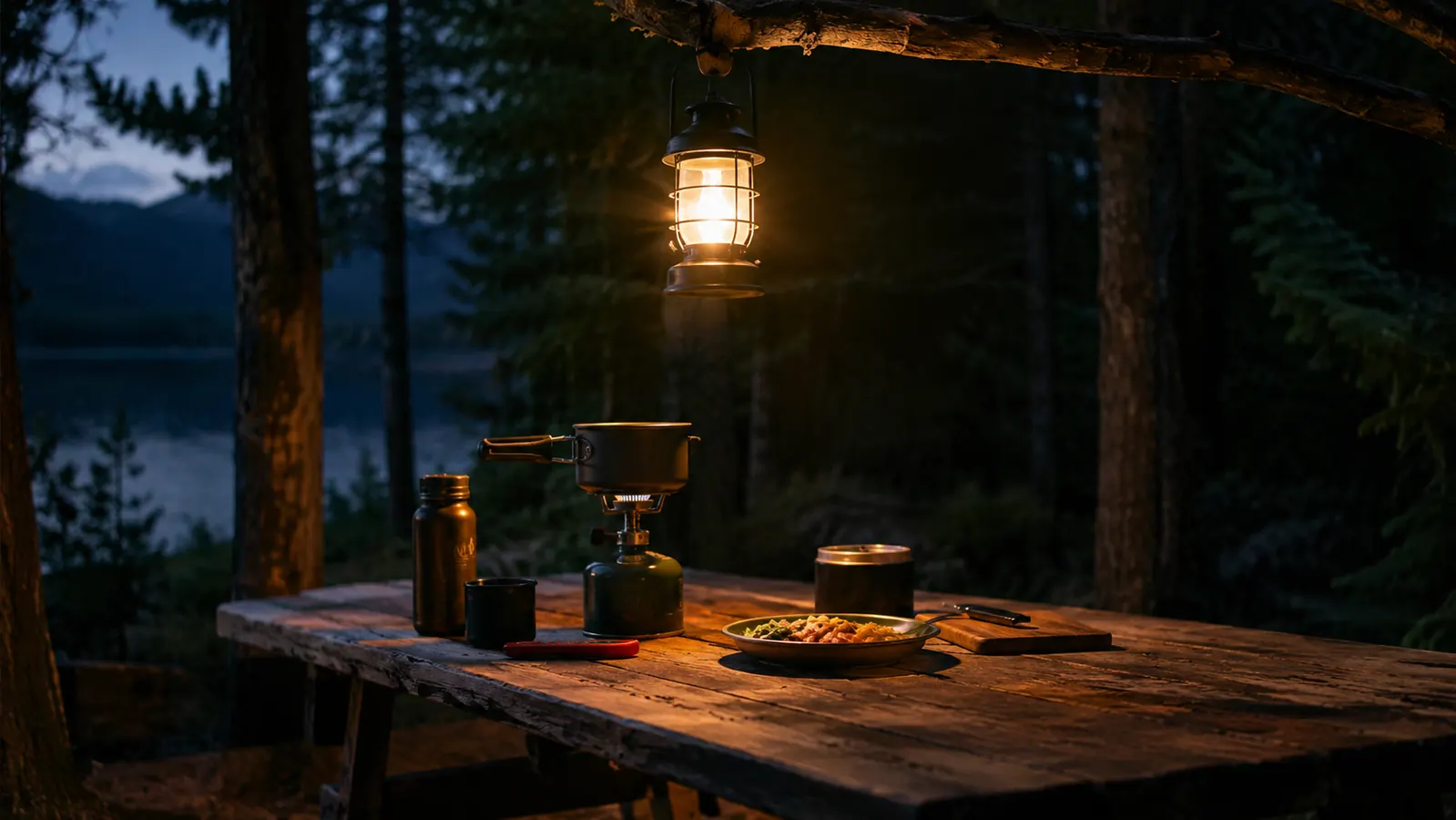
The Lepro has four light modes, and I use all of them. Full brightness for cooking, cleaning fish, or any job where I need to see detail. The middle setting for eating and talking around the table. The low setting for the tent, and the lowest setting for the middle of the night when I just need to find my boots without waking the whole campground. Each mode has a job, and using the right one makes the battery last. The modes are easy to click through, and the button is easy to find in the dark, which matters more than you would think at two in the morning.
A thousand lumens is a lot of light. It is great for filleting a walleye at the cleaning table, but it is too much for sitting around talking. It washes everything out and it draws every bug in the county. The low modes are where the battery life lives. I have run this lantern for three straight nights on the low setting, and it was still glowing when I packed up Sunday morning. I have never once run it dead on a trip.
The other thing I do is aim the light where I need it. I set the lantern on a stump, a cooler, or the corner of the table and angle it toward the work. A little angle makes a big difference when you are trying to see a knot in a fishing line or a split in a tent pole repair. When I am cleaning fish at the station, I set it on the rail above the table so the light comes down over my shoulder instead of into my eyes.
Step 5: Give the Lantern a Home in the Truck
The last step happens after the trip, not before it. When I get home from a camping trip, the lantern goes back on the charger, and when it is full it goes into the bed cap with the tackle box and the stove. It lives there all season. That way it is always charged and always in the truck, and I never have to remember to pack it. I grab it on the way out the door the same way I grab my keys.
This is the part that sold me on the Lepro over another battery lantern. A battery lantern has to be checked, loaded with fresh cells, and checked again. A rechargeable lantern just lives on the charger and gets picked up on the way out the door. For a guy who camps most weekends from May to October, that is the whole difference. It is not about lumens or modes. It is about the lantern being ready when you are.
I do the same with the charging cable. There is one in the kitchen drawer and one in the truck. If I forget one, the other is right there. It is a small thing, but small things are what make a Friday night setup go fast after a long work week. Kyle has borrowed the lantern twice this season for his own trips, and both times it came back charged and ready to go back in the truck.
What Else Helps
A lantern does the big work, but a few small things make the system complete. A headlamp is the first one. When I am hanging the lantern, tying a knot, or digging something out of a cooler, a headlamp keeps both hands free. I wear mine around my neck like a flashlight when I am not wearing it on my head. It is the cheapest piece of gear I own and the one I use the most after the lantern itself.
A second small lantern for the tent is worth carrying if you have room. The main lantern hangs outside, and a small one on low mode inside the tent means you can read, change clothes, and find the zipper without a headlamp. And a power bank in the truck can top off the lantern on a long trip. I have not needed mine yet, but it is cheap insurance for a week-long trip where the lantern works every night.
Finally, keep a spare light source that does not depend on anything. A cheap flashlight or a box of matches costs almost nothing and weighs nothing. The lantern is my main light, but I do not want my whole weekend riding on one piece of gear. If the lantern ever does fail me, I want a backup that does not need charging, batteries, or good luck. I keep a small flashlight in the glove box of the truck, and I keep a box of waterproof matches in the tackle box. Neither one has saved a trip yet. They are there for the trip that needs saving.
I have run this lantern for three straight nights on the low setting, and it was still glowing when I packed up Sunday morning.
Light Your Next Trip the Easy Way
The Lepro 1000LM rechargeable lantern is the one I grab first, and the one that lives in my truck all season. Check today's price on Amazon and see if it fits the way you camp.
Amazon Check Today's Price on Amazon →