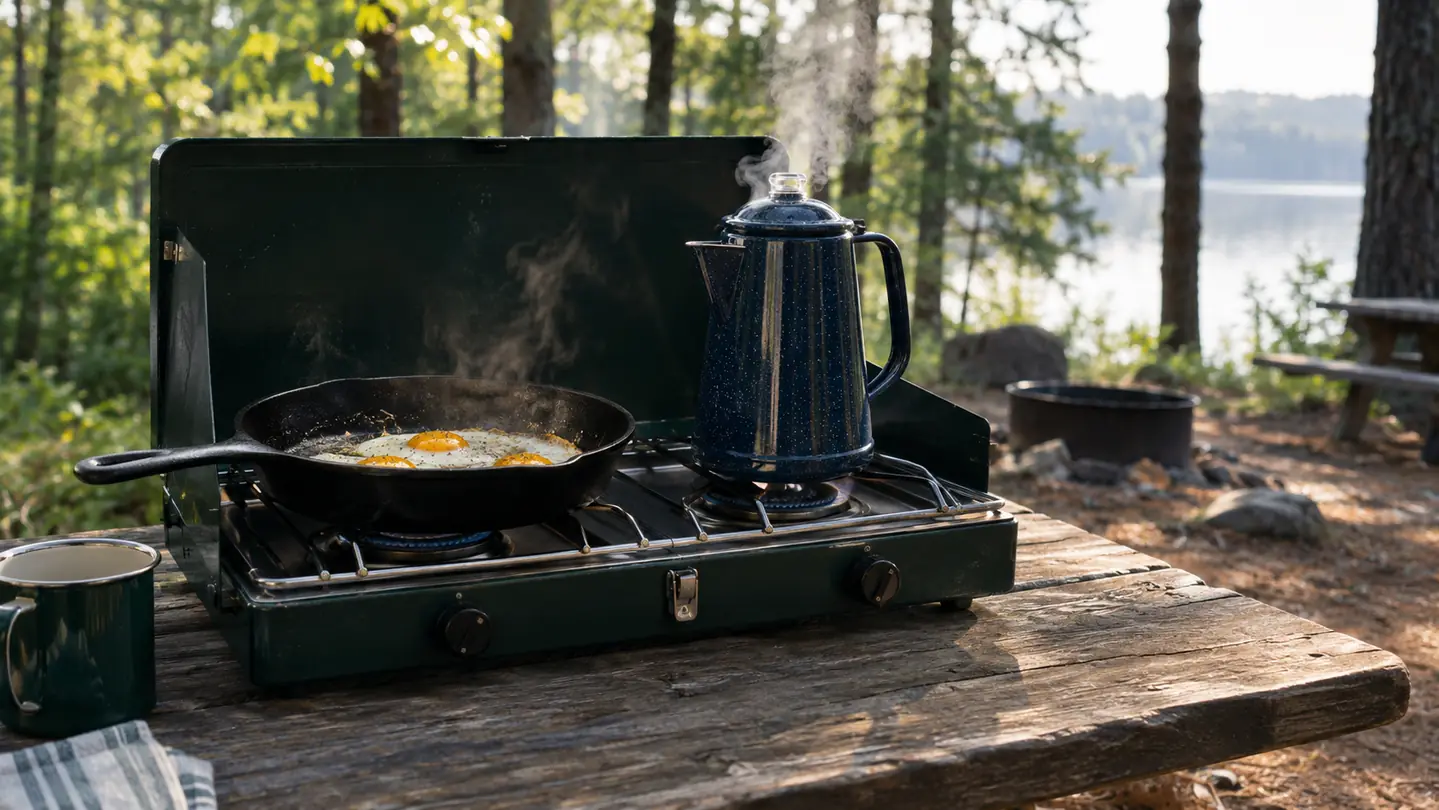
A full camp breakfast is the easiest meal of a camping trip to ruin. You wake up hungry, the coffee is not ready, the eggs are stuck to a cold pan, and the bacon is still raw when the home fries are done. I have cooked breakfast on a Coleman Triton 2-burner propane stove for two full seasons now, most weekends from May through October, plus a week-long trip each summer, and I can tell you the stove was never the problem. The problem was always my order of operations. Once I fixed that, a full breakfast for me, my wife Terri, and our son Kyle takes about 35 minutes, and I am not standing over the stove the whole time.
This article is the routine I settled into. It works on any decent two-burner propane stove, but I will tell you where the Coleman Triton makes it easier and where it does not. If you are a weekend camper like me, a framing carpenter who spends all week swinging a hammer, you do not need a fancy outdoor kitchen. You need a plan, a couple of pans, and a stove that lights the same way every time.
The stove I run every trip: the Coleman Triton 2-burner
Two seasons, every trip from May to October, and it still lights on the first click. If you are shopping for the stove that makes this whole routine possible, this is the one I use.
Amazon Check Today's Price on Amazon →Step 1: Set up the cooking station before you do anything else
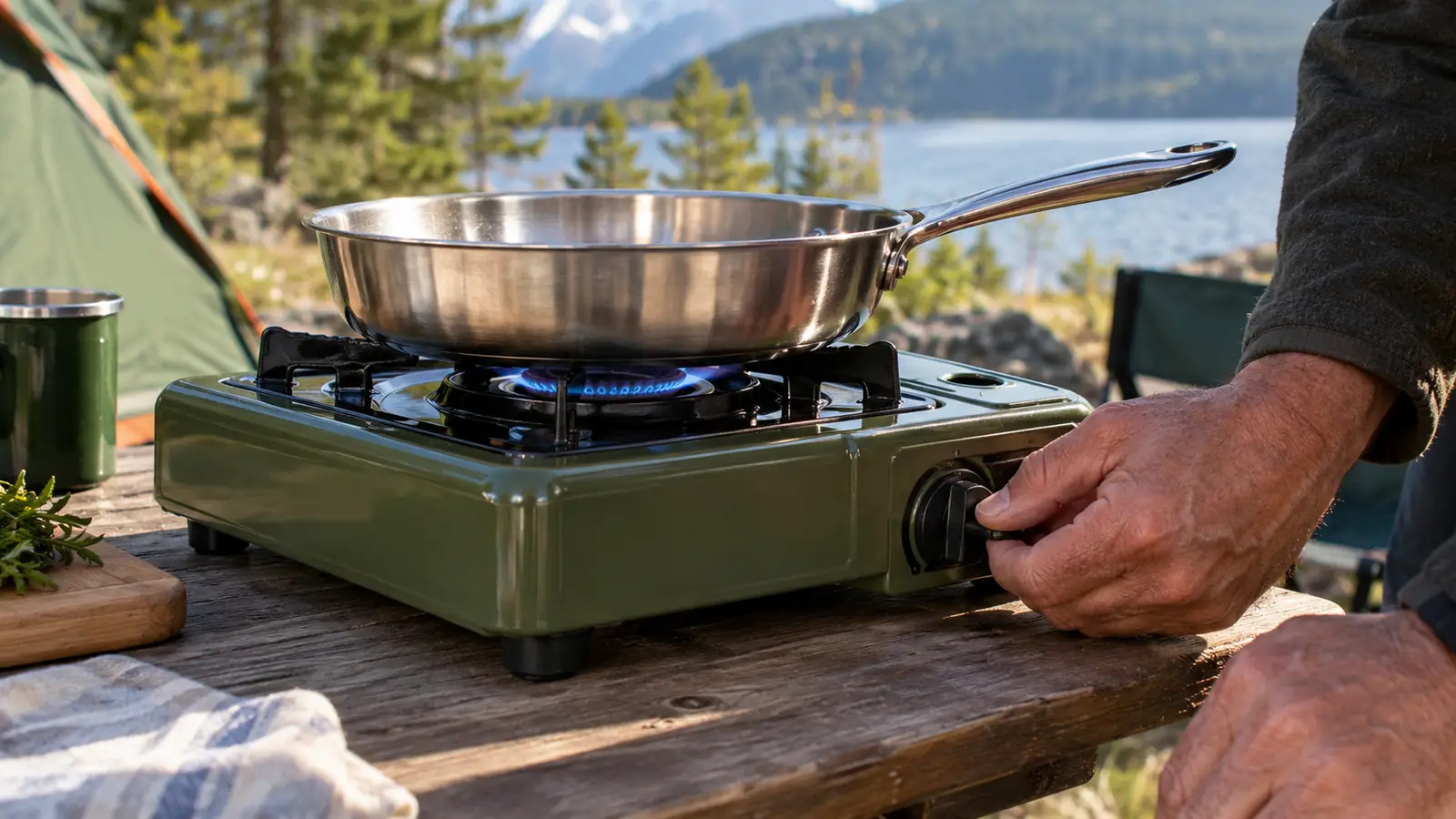
The night before, I set the Coleman on the picnic table, level it with a folded towel under one foot if the table rocks, and leave it there. In the morning I do not want to be hunting for the stove, the propane cylinder, or a flat spot in the dark. I also put the 1 lb propane cylinder on the ground next to the table, not on the table. That keeps the stove lower and steadier, and it keeps the cylinder out of the way of the pans.
Level matters more than people think. A stove that tilts toward the back pools the oil in the back of the pan, which means the eggs cook uneven and the bacon curls into the pool. I check the grate with a small level once, then I do not touch it again. The Coleman Triton sits solid on the table, so once it is level it stays level, even with a full cast iron skillet on it. My old single-burner butane stove would rock every time I stirred the pan. That alone was worth the switch.
I also stage everything on a plastic tote lid or a cutting board next to the stove: eggs, bacon, potatoes, a stick of butter, salt, pepper, and the coffee. That sounds like overplanning, but it is the difference between a relaxed breakfast and a frantic one. When the bacon is going, I do not want to be digging through a cooler for the eggs. The tote lid also gives me a clean surface that is not the picnic table, which usually has pine needles and last night's fire pit dust on it.
Step 2: Start the coffee first, on the back burner
Coffee is the longest pole in the tent. A percolator takes 10 to 12 minutes to do its job, and if you start it after the food, you are eating cold eggs while you wait for it. I put the percolator on the back burner of the Coleman, turn it to medium, and let it work while I do everything else. The back burner is the one I use for anything that just needs to sit and simmer. The front burner gets the high-heat work.
One thing I learned the hard way: do not crank the percolator to high and walk away. Percolators spit. I keep it at a steady medium and check it once when I flip the bacon. If you are making instant coffee or cowboy coffee, this step is shorter, but the principle is the same. Get the coffee going before the food so it is ready when the food is ready. There is nothing sadder than a plate of bacon going cold while you wait on a percolator.
The Coleman Triton's burner control is smooth enough that I can set the back burner to a low, even flame and trust it. On the old single-burner butane stove I used before this one, the flame was either high or off, and the percolator boiled over every other trip. That is one of the reasons I switched to a two-burner with real temperature control. The other reason is that a full breakfast needs two burners at once. You cannot do bacon, potatoes, eggs, and coffee on one burner without turning breakfast into a relay race.
Step 3: Cook the bacon first, then the potatoes in the bacon fat
Bacon is the best thing to cook first because it makes its own cooking fat, and that fat is what the home fries need. I lay the strips in a cold cast iron skillet, then bring the front burner up to medium. Starting cold keeps the bacon from curling into a tight ball and cooks it more evenly. I flip it once, about halfway through, and pull it to a paper towel when it is as done as we like it. That is usually 8 to 10 minutes for a full pound. For the two of us it is a pound; when Kyle comes along I cook a pound and a half.
Here is where the two-burner stove earns its keep. While the bacon cooks on the front burner, I dice the potatoes on the cutting board next to the stove. When the bacon comes out, I pour most of the fat into a second skillet, leave a thin layer in the bacon pan for the eggs, and put the potatoes in the fat skillet on the now-empty front burner. The potatoes go in the pan that already has a quarter inch of hot bacon fat, which is the difference between crispy home fries and soggy ones.
I use the Coleman's front burner on medium-high for the potatoes and stir them every few minutes. Small dice, about half an inch, cook in 12 to 15 minutes. Big chunks take 20 plus and they still come out raw in the middle. If I am in a hurry, I microwave the diced potatoes for two minutes at home before we leave. That is the one shortcut I allow myself, and it works. Frozen hash browns work too, but they need more fat and more stirring, and they never taste as good as potatoes cooked in bacon fat.
Step 4: Eggs go last, in the bacon pan, on medium-low
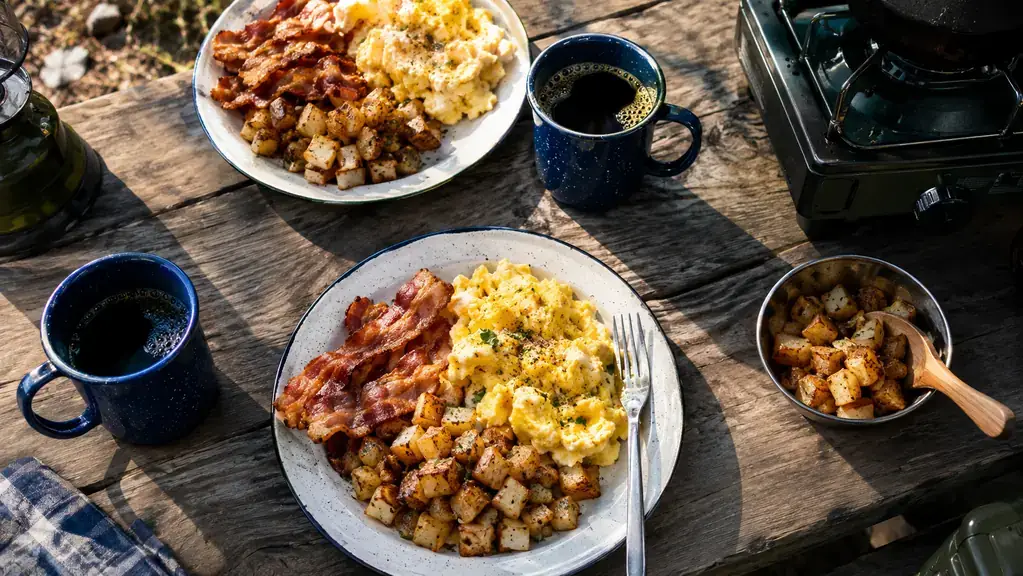
Eggs are the fastest thing on the stove and the easiest to ruin. They go last, after the potatoes are nearly done, because they take four minutes and everything else takes longer. I wipe the bacon pan down with a paper towel, leaving just a light film of fat, and put it on the back burner at medium-low. The back burner on the Coleman Triton runs a little cooler than the front, which is exactly what eggs want.
I crack the eggs into a bowl first, six eggs for the three of us, and pour them in all at once. That way they cook evenly and I am not standing there cracking eggs one at a time while the potatoes burn. I stir them slowly with a silicone spatula, pulling the cooked egg off the bottom, and take them off about 30 seconds before they look done. They finish in the pan. Over medium-low, that is about four minutes from pour to plate.
If someone wants scrambled, this is the method. If someone wants fried, I do those one or two at a time in the same pan after the scramble is out. The key on both is the same: medium-low heat and patience. Eggs on high heat turn into rubber in about ninety seconds, and no stove setting can fix that. I have watched guys at the next campsite over cook eggs on high and wonder why they taste like cardboard.
Step 5: Plate in a warm spot and eat while it is hot
The last mistake people make is plating onto cold plates. By the time the eggs are done, the bacon is cold and the coffee is lukewarm. I set the plates on the lid of the cooler, which is out of the sun, and I put the bacon and potatoes on them as they finish. The eggs go on last, straight from the pan, and the whole plate is still hot when it hits the table.
I also keep the coffee percolator on the back burner on low while we eat. A second cup should not require a trip back to the stove. The Coleman Triton holds a low flame without flickering out, which is something I cannot say for the cheap single-burner I used to own. That steady low end is worth a lot at 7 in the morning. Terri drinks two cups, so this matters more than you might think.
Cleanup is part of the routine too. I fill the big skillet with a finger of water and let it soak while we eat. Ten minutes later, a plastic scraper takes everything off. The stove itself gets wiped down with a damp rag once it is cool, and the grates go back in the truck bed cap with the rest of the gear. A Coleman that gets wiped down after every trip will still look and work right at the end of the season. Mine has been thrown in the bed of my pickup for two years and it still looks almost new.
Why the Order Matters More Than the Stove
The order is not a preference, it is a sequence of pans. Bacon first because it creates the fat. Potatoes second because they take the longest and they cook in that fat. Eggs last because they are fast and they pick up the flavor left in the pan. Coffee runs the whole time on the back burner because it is the slowest thing of all. Run that sequence and every burner is doing something useful at every minute. Run it backward and you are washing pans between courses and eating cold food.
The stove matters too, but less than you think. A two-burner propane stove with a steady low flame makes the sequence easy. A single burner makes it miserable. The Coleman Triton is the stove I settled on after the butane single-burner died, and two seasons later I have no complaints. It lights on the first click, it holds a low flame, and it takes a beating in the truck bed. That is all I ask.
What Else Helps
A full camp breakfast does not need a lot of gear, but a few things make it genuinely easier. A 10-inch cast iron skillet is the workhorse; it holds heat and it cleans up with a scrape and a wipe. A second, lighter skillet for the potatoes means you are not washing the bacon pan mid-meal. A silicone spatula that can take heat, a set of long tongs, and a percolator that does not spit are the rest of the kit. I also carry a small plastic cutting board and a folding table if the campsite does not have a picnic table. None of this is expensive, and it all fits in one plastic tote.
The stove itself is the only piece I would not compromise on. A two-burner propane stove with a steady low end, like the Coleman Triton, is the difference between cooking breakfast and fighting it. My old butane single-burner made every meal a chore. The Coleman makes breakfast feel like the best part of the morning, and that is worth the space it takes in the truck bed.
Bacon first, potatoes in the bacon fat, eggs last on medium-low, and coffee on the back burner the whole time. That order turned my camp breakfast from a scramble into a 35-minute routine.
The same Coleman Triton I have run for two seasons
It lights on the first click, holds a low flame for the percolator, and takes whatever a truck bed throws at it. If you are ready to cook a real breakfast at camp, this is the stove to start with.
Amazon Check Today's Price on Amazon →